Do Cats, Lions and Tigers Understand each other? | Animal facts for kids
Listen to this episode
Show Notes
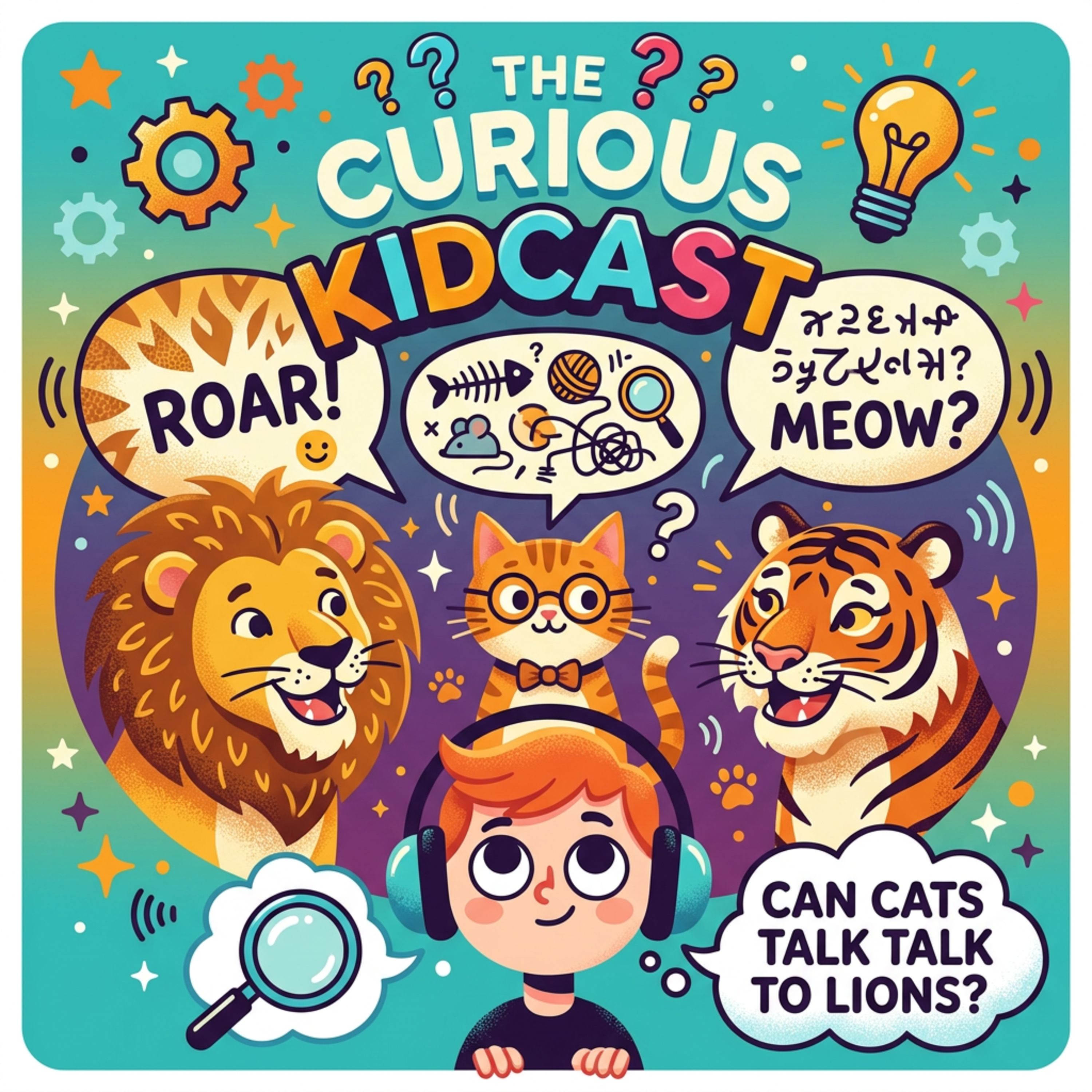
In this episode of The Curious Kidcast, host Charlie dives deep into the science of animal communication to find out whether cats, lions, and tigers can actually understand each other.
This episode is packed with fun facts about animal communication, the feline family, body language in big cats, and even whether cats from different countries around the world speak the same language. It is a brilliant episode for curious kids aged 7 to 11, perfect for science learning at home, homeschool nature study, family car journeys, or just satisfying that brilliant, never-ending curiosity your child carries everywhere.
What Your Child Will Learn
This episode introduces kids to real science concepts in a fun, accessible, and laugh-out-loud way. By the end of the episode, young listeners will be able to:
- Explain what the feline family is and which animals belong to it
- Understand how cats, lions, and tigers use body language, sound, and scent to communicate
- Describe what a slow blink means in cat communication
- Explain why cats from different countries can still understand each other
- Understand the difference between species-specific signals and universal animal communication
- Answer fun quiz questions about animal science with growing confidence
Key Science Topics Covered
The Feline Family
Cats, lions, and tigers all belong to the biological family Felidae, commonly called the feline family. This shared ancestry means they have a lot of physical and behavioural traits in common, including sharp claws, strong hunting instincts, excellent night vision, and overlapping communication systems. Understanding this helps children build foundational knowledge in biology, taxonomy, and the natural world.
Do Cats From Different Countries Understand Each Other?
A standout section of this episode explores whether a cat from England would understand a cat from Japan or Canada. The answer is a resounding yes. Domestic cats are all the same species and use the same core set of signals regardless of geography. This connects to big ideas in biology around species identity, universal behaviour, and the difference between learned habits and instinctive communication.
Why This Episode Is Great for Homeschoolers and Families
The Curious Kidcast is designed to make science and nature irresistibly engaging for children aged 7 to 11. This episode on feline communication ticks a wide range of curriculum boxes, including animal biology, ecosystems, classification of living things, and communication in the natural world. It also encourages children to ask questions about everyday life, like wondering why your cat behaves the way it does, and to turn those observations into genuine scientific curiosity.
About The Curious Kidcast
The Curious Kidcast is a fun, facts-filled science and nature podcast for children aged 7 to 11. Every episode starts with a real question sent in by a real kid, and host Charlie investigates the answer with plenty of humour, surprising science, and an end-of-episode quiz. Episodes are screen-free, family-friendly, and designed to make learning feel like an adventure. The Curious Kidcast is perfect for curious kids, busy parents, homeschool families, and anyone who believes that asking big questions is always a great idea.
Subscribe and never miss an episode.
If your child has a question they would love Charlie to investigate, head to curiouskidcast.com and send it in. You can also find The Curious Kidcast on Spotify, Apple Podcasts, and wherever you listen to podcasts.