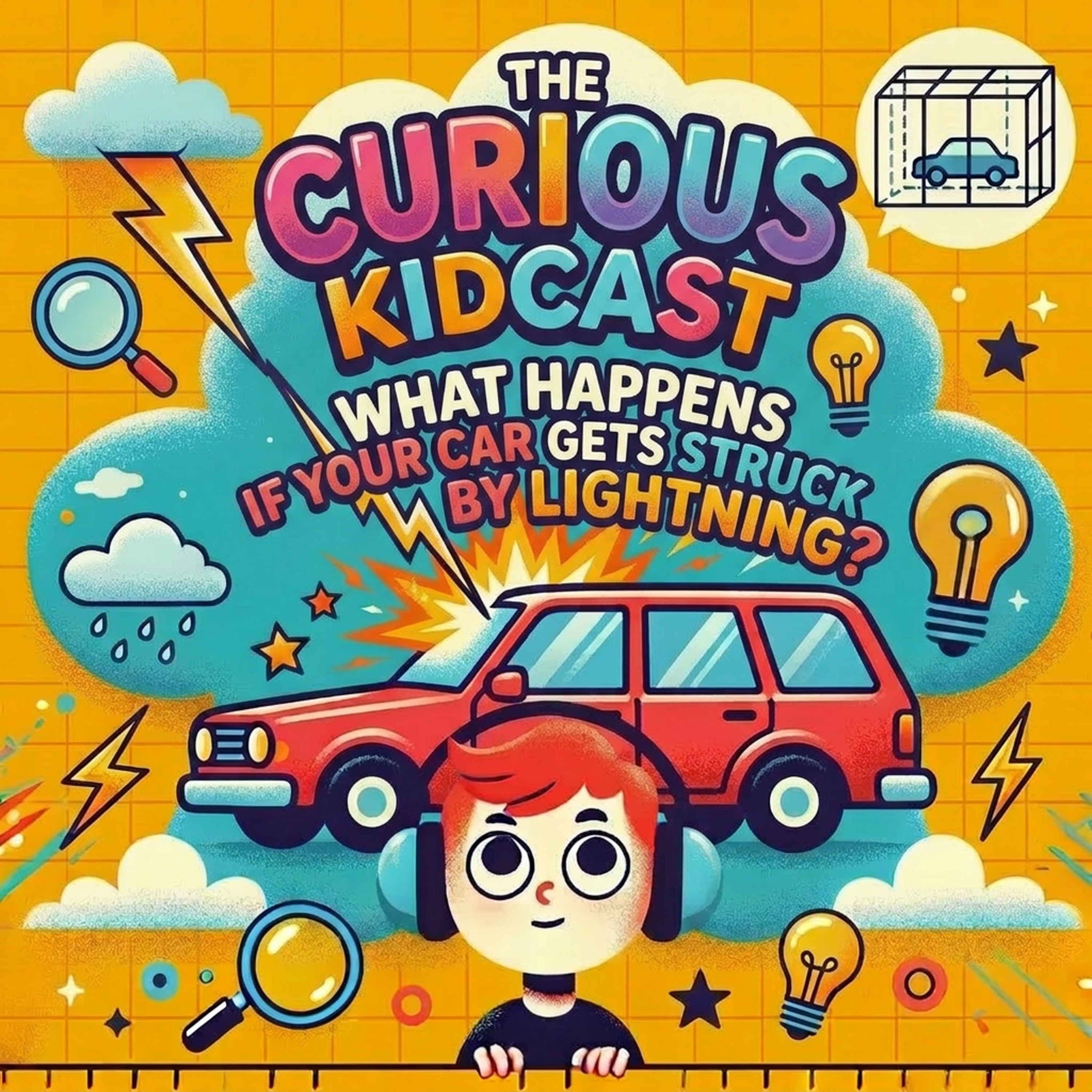
What Happens If Your Car Gets Struck By Lightning?
Listen to this episode
What You'll Learn
- What lightning is and how it forms during a thunderstorm.
- Why being inside a metal car is often safer than being outside during lightning.
- What a Faraday cage is and how it helps protect people inside a vehicle.
- Why rubber tyres do not protect a car from lightning.
- What damage lightning can do to a car’s electronics, windows, and bodywork.
- What to do, and what not to do, during a lightning storm.
- Why convertibles, motorbikes, and bicycles offer much less protection.
- How science helps us test myths and understand severe weather more clearly.
- Lightning is a giant electrical discharge in the atmosphere.
- A lightning bolt can be far hotter than most people imagine.
- The metal body of a car can help guide electricity around the outside.
- Modern car electronics can still be damaged even when passengers stay safe.
- Science can explain why some common lightning myths are wrong.
- Weather science helps families make safer choices during storms.
Show Notes
The Curious Kidcast is a fun podcast for kids who love big questions, amazing facts, science, weather, nature, and learning how the world works. In this exciting episode, Charlie explores a brilliant stormy science mystery: what really happens if lightning strikes a car? It is a fun, surprising, and easy-to-understand look at lightning, electricity, safety, and the science hiding inside everyday life.
If you are looking for kids curiosity podcasts, a fun podcast for kids, or a science podcast for kids that mixes real facts with family-friendly learning, this episode is packed with discovery. It is ideal for curious kids aged 7 to 12, as well as parents, teachers, and homeschoolers who want educational audio that helps children learn, laugh, and stay curious.
What kids will learn in this episode
- What lightning is and how it forms during a thunderstorm.
- Why being inside a metal car is often safer than being outside during lightning.
- What a Faraday cage is and how it helps protect people inside a vehicle.
- Why rubber tyres do not protect a car from lightning.
- What damage lightning can do to a car’s electronics, windows, and bodywork.
- What to do, and what not to do, during a lightning storm.
- Why convertibles, motorbikes, and bicycles offer much less protection.
- How science helps us test myths and understand severe weather more clearly.
Fun weather and electricity facts for kids
- Lightning is a giant electrical discharge in the atmosphere.
- A lightning bolt can be far hotter than most people imagine.
- The metal body of a car can help guide electricity around the outside.
- Modern car electronics can still be damaged even when passengers stay safe.
- Science can explain why some common lightning myths are wrong.
- Weather science helps families make safer choices during storms.
Perfect for families and homeschooling
This episode links well with KS2 science topics including electricity, weather, forces, materials, safety, and scientific thinking. It is perfect for family listening, classroom use, home education, and homeschooling, helping children learn real science facts in a fun, memorable, and engaging way.
It also supports learning about storms, electrical charge, conductors and insulators, and how scientists investigate and debunk myths. Whether you are listening on a road trip, during a homeschool science session, or at home after school, this episode turns a nervous weather question into a fun science adventure.
Why families love The Curious Kidcast
The Curious Kidcast turns curious kids questions into fun science adventures for young listeners. Each episode explores science, nature, weather, animals, space, the human body, and everyday mysteries with humour, storytelling, and amazing facts. It is a great choice for curious children, parents, teachers, and homeschool families looking for a fun way to learn together.
About The Curious Kidcast
The Curious Kidcast is a family-friendly educational podcast for kids aged 7 to 12. Each episode answers curious kids questions with fun storytelling, humour, and facts that help children understand the world around them. It is perfect for families who want fun learning, real science, and a podcast kids genuinely enjoy.
Send your question at curiouskidcast.com.
Keywords: lightning strikes a car, lightning for kids, weather podcast for kids, electricity for kids, Faraday cage for children, science podcast for kids, curious kids questions, fun podcast for kids, kids curiosity podcasts, homeschool science, family podcast, STEM for kids, weather facts for kids, thunderstorm safety for children, educational podcast for kids, primary school science, science myths for kids, The Curious Kidcast