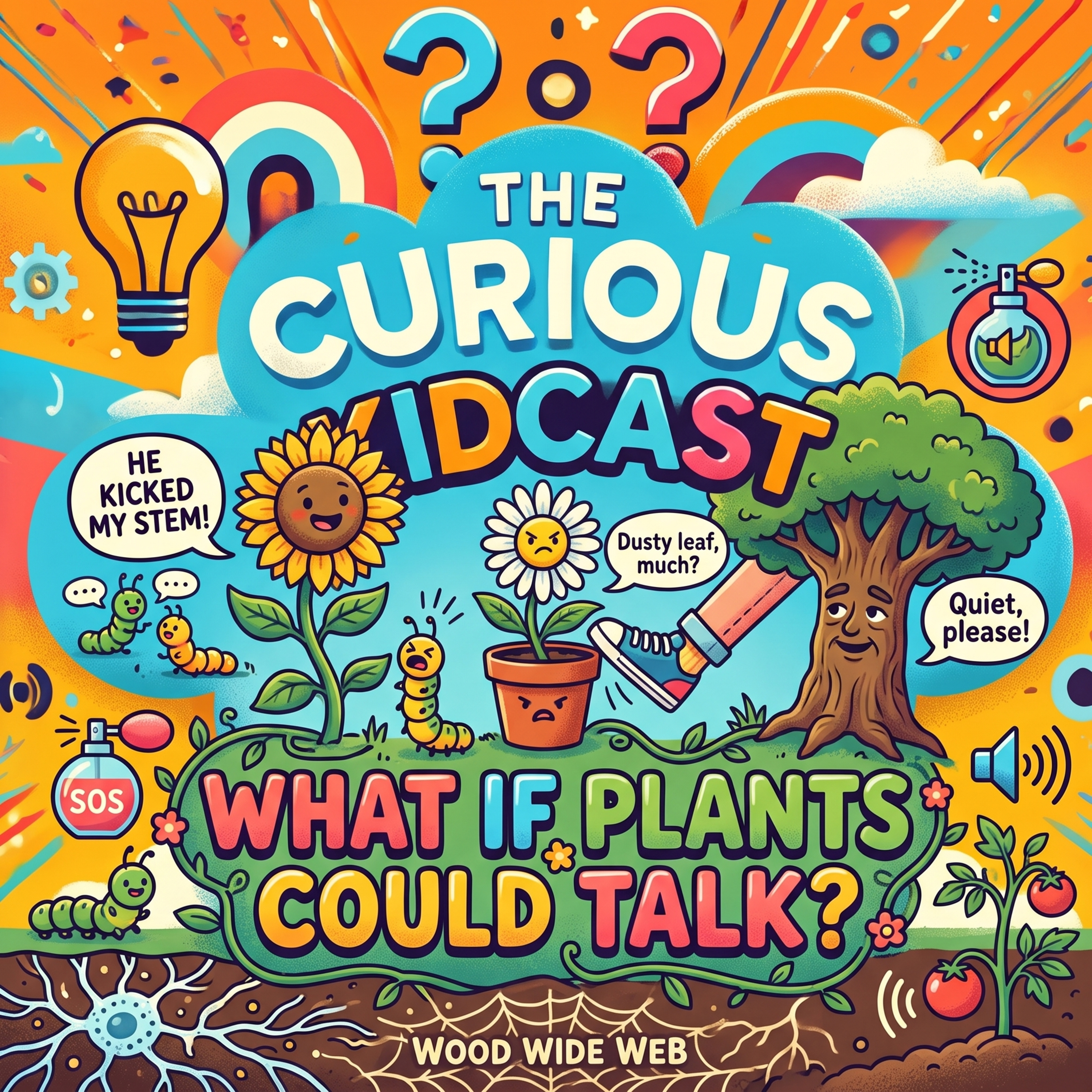
What if plants could talk? Curious Kids Questions
Listen to this episode
What You'll Learn
- Airborne Warning Signals: How plants release chemical smells (VOCs) to warn neighbouring plants of hungry caterpillars and call in helpful predator insects.
- The "Wood Wide Web": How mycorrhizal fungal networks link tree roots in forests to share life-saving nutrients and emergency alerts.
- Turgor Pressure Science: Why thirsty houseplants flop over dramatically when they lose internal cell pressure.
- Imagination Meets Ecology: How "plant diplomats" and botanical communication could change farming and climate conservation forever.
Try This at Home
Show Notes
Ever wondered what your houseplant would say if it caught you kicking your laundry under the bed? In this laugh-out-loud, brain-stretching episode of The Curious Kidcast, Charlie tackles a curious question sent in by a listener: What if plants could talk?
We explore the comedic chaos of dramatic peace lilies, grumpy cacti, and terrified suburban lawns facing the weekend mower. Then, we uncover the mind-boggling real science: plants already do talk! From airborne chemical distress flares (Volatile Organic Compounds) to the underground fungal internet known as the Wood Wide Web, kids and parents will learn how nature communicates right beneath our feet.
Homeschooling & Family Listening Tip:
Perfect for morning basket listening, school runs, or unit studies on botany, ecosystems, and plant biology. Includes an interactive 3-question trivia challenge at the end!
What Kids Will Learn in This Episode
- Airborne Warning Signals: How plants release chemical smells (VOCs) to warn neighbouring plants of hungry caterpillars and call in helpful predator insects.
- The "Wood Wide Web": How mycorrhizal fungal networks link tree roots in forests to share life-saving nutrients and emergency alerts.
- Turgor Pressure Science: Why thirsty houseplants flop over dramatically when they lose internal cell pressure.
- Imagination Meets Ecology: How "plant diplomats" and botanical communication could change farming and climate conservation forever.
Family & Homeschool Discussion Questions
- If your bedroom houseplant could share one funny secret about you, what would it reveal?
- Why do you think trees share food with smaller baby saplings through fungal roots instead of keeping it all to themselves?
- How could listening to plants help organic farmers grow food without using harsh chemicals?
Hands-On Extension Activity: The Scent Trail Experiment
Try this at home or in class: Crush a mint leaf or a blade of grass between your fingers. Take a deep breath. That burst of fresh fragrance is the plant releasing volatile organic compounds! Have students research which local garden plants use scents to attract helpful insects like ladybirds or honeybees.
Connect & Subscribe
Have a curious question of your own? Send it to Charlie at curiouskidcast.com.
Follow and subscribe on Apple Podcasts, Spotify, or your favourite family podcast app so you never miss an adventure into the weird world of science!
The Curious Kidcast. Tagged under: Kids Science, Parenting Resources, Homeschool Science Curriculum, Fun Facts, Nature Learning, Family Podcasts.