The podcast where curious kids get answers to questions that even parents don't know!
Curious about the world? The Curious Kidcast is the ultimate podcast for kids who love asking big questions! Whether it's about space, nature, history, animals, or everyday science, we provide fun and easy-to-understand explanations for young minds.
Each episode explores amazing science facts, weird but true stories, and fascinating discoveries that spark curiosity and creativity. Our engaging podcast is perfect for kids aged 6-12 who love learning and exploring new topics.
Parents, this is the perfect way to get your kids excited about STEM, critical thinking, and lifelong learning. Listen together during car rides, bedtime, or school projects!
Subscribe now and start your learning adventure with The Curious Kidcast – where every question leads to an exciting discovery!
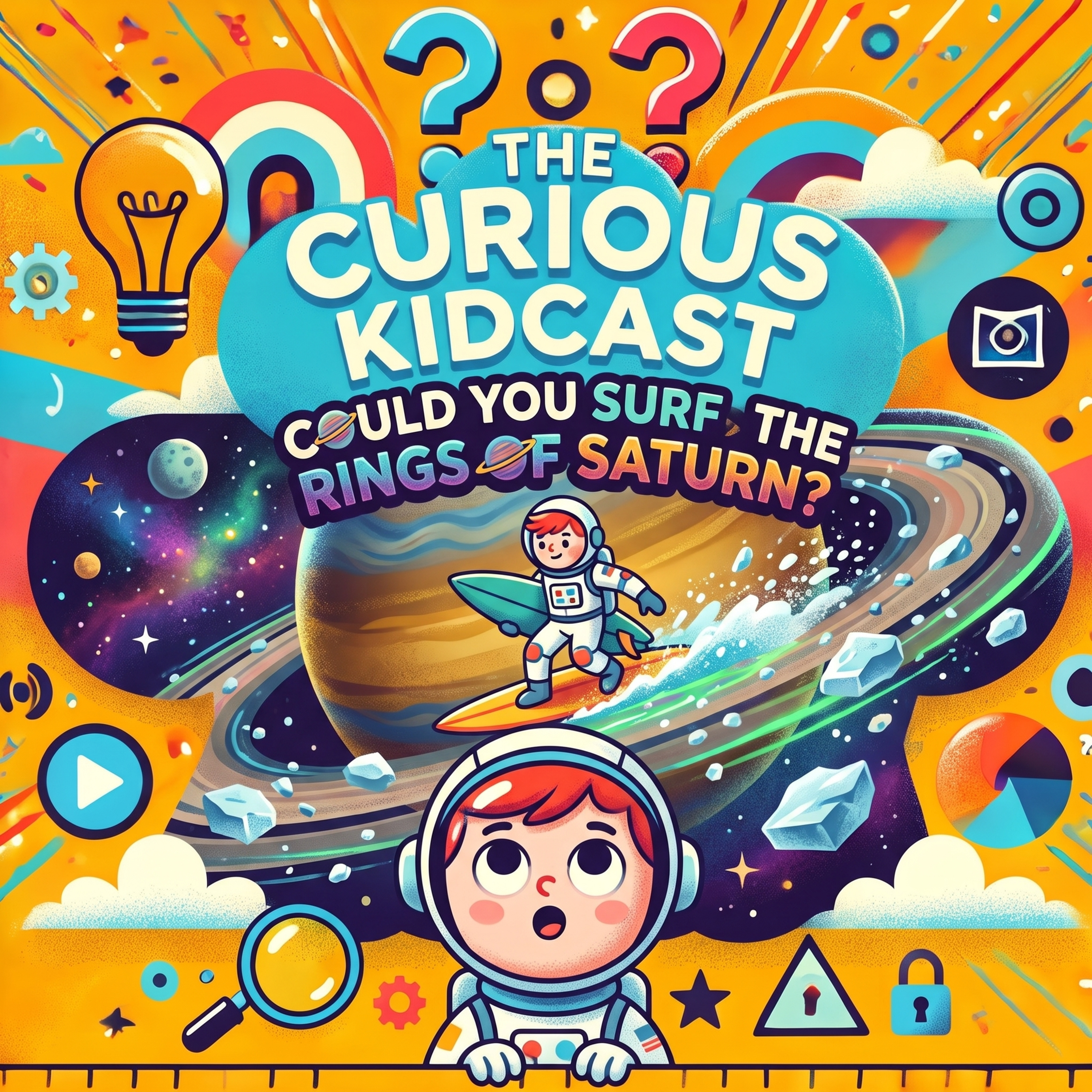
Grab your neon-orange spacesuit and rocket-powered surfboard! In this week's thrilling, out-of-this-world episode of The Curious Kidcast, Charlie answers an amazing question from a listener: Could...
Full Episode & NotesGrab your neon-orange spacesuit and rocket-powered surfboard! In this week's thrilling, out-of-this-world episode of The Curious Kidcast, Charlie answers an amazing question from a listener: Could you surf on the rings of Saturn?
Join us as we blast off into the solar system to learn the fun facts about what Saturn's rings are actually made of. We'll discover the extreme speeds of space ice, the freezing temperatures of the cosmic blender, and the incredible two-mile-high "gravity waves" created by tiny shepherd moons. It's the perfect mix of extreme sports imagination and real-world astronomy to help your family learn and laugh together!
Homeschooling & Parenting Tip:
This episode is fantastic for unit studies on the solar system, gravity, and states of matter. It’s a great, screen-free way for
kids
to engage with high-level physics concepts while having
fun
Stick around for the interactive 3-question quiz at the end to test listening comprehension.
What Kids Will Learn in This Episode
Family & Homeschool Discussion Questions
Hands-On Extension Activity: The Ice Collision Experiment
Try this at home: Place several ice cubes in a large bowl of water. Swirl the water rapidly in a circle using a spoon to simulate Saturn's orbit. Watch how the ice chunks crash, bump, and group together. This is exactly what the rocky ice debris does in Saturn's rings—just at a much faster speed and without the liquid water! A perfect visual science activity for nature and space lovers.
Connect & Subscribe
Do your kids have a curious question of their own? Send it to Charlie at curiouskidcast.com.
Follow and subscribe on Apple Podcasts, Spotify, or your favorite family podcast app so you never miss an adventure!
The Curious Kidcast. Tagged under: Science, Kids, Parenting, Homeschooling, Nature, Learn, Facts, Fun, Family.
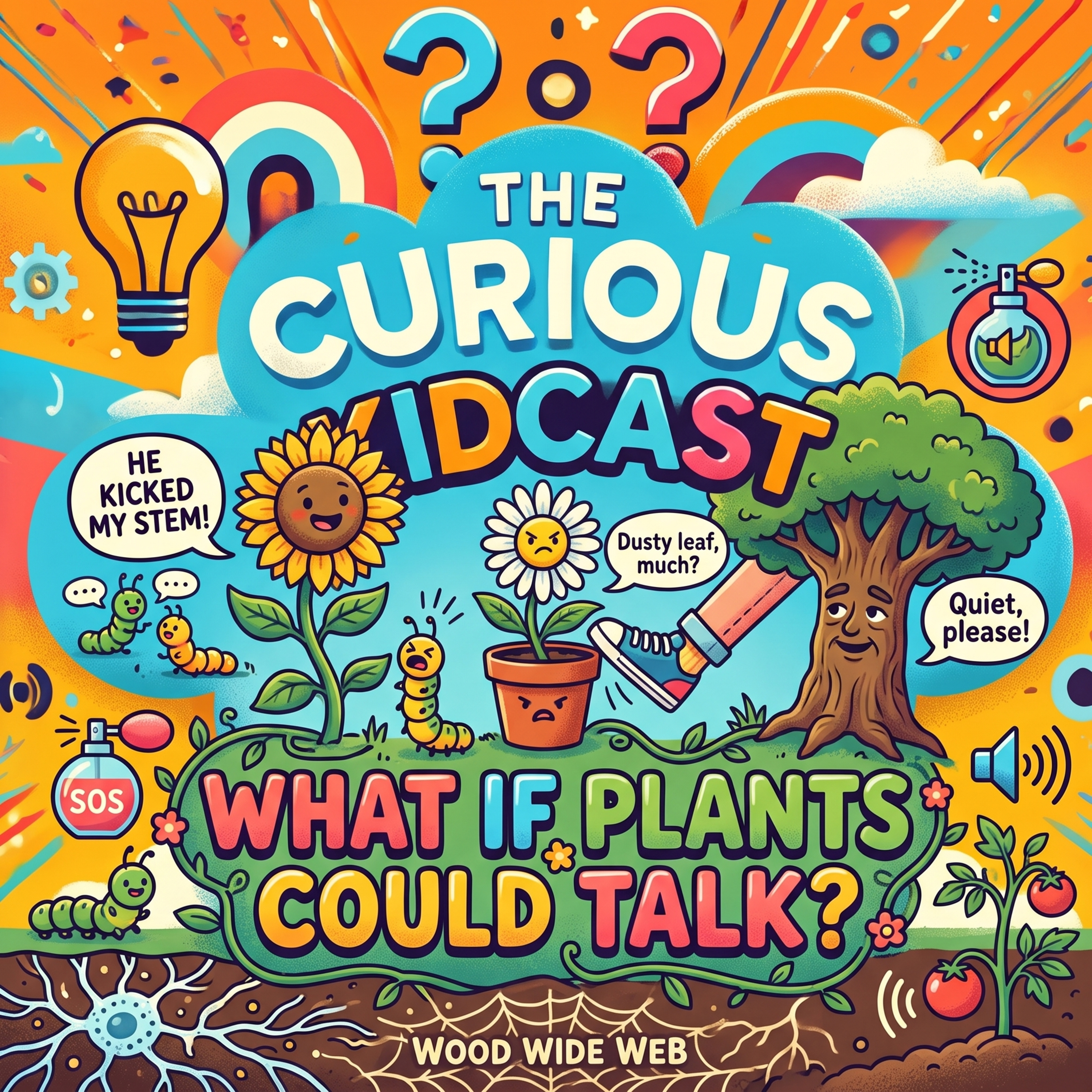
Ever wondered what your houseplant would say if it caught you kicking your laundry under the bed? In this laugh-out-loud, brain-stretching episode of The Curious Kidcast, Charlie tackles a curious que...
Full Episode & NotesEver wondered what your houseplant would say if it caught you kicking your laundry under the bed? In this laugh-out-loud, brain-stretching episode of The Curious Kidcast, Charlie tackles a curious question sent in by a listener: What if plants could talk?
We explore the comedic chaos of dramatic peace lilies, grumpy cacti, and terrified suburban lawns facing the weekend mower. Then, we uncover the mind-boggling real science: plants already do talk! From airborne chemical distress flares (Volatile Organic Compounds) to the underground fungal internet known as the Wood Wide Web, kids and parents will learn how nature communicates right beneath our feet.
Homeschooling & Family Listening Tip:
Perfect for morning basket listening, school runs, or unit studies on botany, ecosystems, and plant biology. Includes an interactive 3-question trivia challenge at the end!
What Kids Will Learn in This Episode
Family & Homeschool Discussion Questions
Hands-On Extension Activity: The Scent Trail Experiment
Try this at home or in class: Crush a mint leaf or a blade of grass between your fingers. Take a deep breath. That burst of fresh fragrance is the plant releasing volatile organic compounds! Have students research which local garden plants use scents to attract helpful insects like ladybirds or honeybees.
Connect & Subscribe
Have a curious question of your own? Send it to Charlie at curiouskidcast.com.
Follow and subscribe on Apple Podcasts, Spotify, or your favourite family podcast app so you never miss an adventure into the weird world of science!
The Curious Kidcast. Tagged under: Kids Science, Parenting Resources, Homeschool Science Curriculum, Fun Facts, Nature Learning, Family Podcasts.
If you tipped your family car backward and drove straight up, how long would it take to reach outer space? Host Charlie investigates a listener question to find out where Earth ends, where space begi...
Full Episode & NotesIf you tipped your family car backward and drove straight up, how long would it take to reach outer space? Host Charlie investigates a listener question to find out where Earth ends, where space begins, and why the universe is so mind-bogglingly huge. Perfect for curious kids, family listening, and homeschool STEM units!
What You'll Learn in This Episode
Homeschool & Classroom Discussion Prompts
Connect & Submit Questions
Got a burning science question that makes your brain itch? Visit us at curiouskidcast.com to send it in, explore more episodes, and grab extra learning resources.
Don't forget to follow, share with a friend, and leave a review to help more families discover the fun of everyday science!
Topics & Keywords
Keywords: science for kids, homeschool science curriculum, parenting podcast, family road trip audio, STEM education, outer space facts, fun facts for children, nature and astronomy, learn about planets, educational podcasts for elementary students.
Subscribe to The Curious Kidcast on your favorite platform
We release a new episode every week, usually on Wednesday mornings!
The Curious Kidcast is designed for children aged 7-11, but curious minds of all ages will enjoy our content!
Absolutely! We love hearing from our listeners. Use the contact form below to send us your curious questions!
Episodes typically run between 10-15 minutes - the perfect length for curious young minds!